
Who Owns the Journey?
When Everyone Does Their Job, Who Makes Sure the Trade Actually Works?
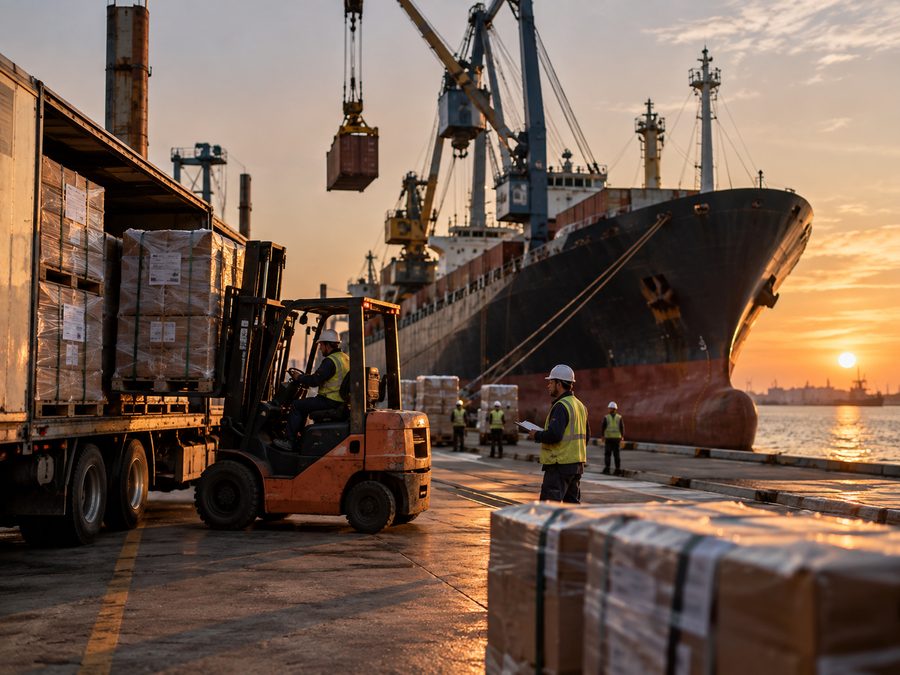
A shipment can stall even when the supplier, freight forwarder, warehouse and customs broker are each doing their job. The risk sits at the handovers, where information has to pass from one party to the next. Accountability does not require one company to do everything, but it does require a named owner for each decision, a clear meaning for each milestone and someone who keeps sight of the entire journey.
A supplier confirms that the goods are ready. The freight forwarder has booked space. The warehouse has received the cartons. The customs broker is reviewing the documents.
Every company appears to be doing its job. Yet the shipment has not moved.
This is one of the less visible problems in international trade. We spend time selecting reliable suppliers, negotiating freight rates and appointing experienced service providers. We assume that a group of capable specialists will naturally produce a well-executed transaction. Sometimes it does. But choosing good companies and managing the work between them are not the same thing.
The gaps appear at the handovers.
When information stops between two stages
Consider a manufacturer that finishes production and notifies the buyer. The freight forwarder needs the final cargo details before confirming the shipment arrangements. The warehouse has recorded a weight different from the figure on the packing list. The customs broker is waiting for a corrected document before preparing the declaration.
None of these problems is unusual. Each company may be fulfilling its own assignment. The difficulty is that no individual task can be completed in isolation.
Who noticed the difference in weight? Who is authorised to confirm the correct figure? Who sends the revised document to the freight forwarder and broker? And if those corrections mean the intended sailing will be missed, who decides whether to rebook or change the plan?
These are not minor administrative questions. They determine whether the shipment advances, incurs avoidable costs or remains on hold.
A delay often starts not with a major failure but with information that did not reach the next person in time.
Accountability does not require one company to do everything
It may seem easier to put the whole transaction under a single provider: one supplier, one logistics company and one point of contact. For some shipments, that arrangement creates a clearer line of responsibility.
But it is not the only effective model. A specialist forwarder may be best placed to arrange transport. An independent inspector may have the right technical expertise. A customs broker in the destination market may understand local procedures better than a team coordinating the order from abroad.
Using several specialists is not, by itself, a weakness. The risk appears when their responsibilities meet but no one is accountable for the handover.
Managing the journey does not mean making every decision personally or carrying out every task within one organisation. It means establishing who makes each decision, which information they need, when a task passes to someone else and what evidence confirms that it is complete.
A confirmed factory release is not the same as a confirmed collection. A warehouse receipt is not the same as an approved packing list. A freight booking is not proof that every export document is ready.
Each milestone needs a clear meaning. Otherwise, reassuring status updates can hide work that is still unfinished.
The question that keeps a shipment moving
In a complex transaction, I return to two simple questions: What are we waiting for, and who is responsible for the next step?
The answers should be specific. “The documents are being handled” is not a useful status update. “The supplier must correct the net weight on the packing list before the broker can submit the declaration” identifies the problem, its owner and the action required.
That clarity matters even more when plans change. A delayed inspection can affect collection, warehouse availability and vessel schedules. A revised quantity can change freight calculations and documentation. When one milestone shifts, the relevant parties need to know before the delay spreads.
Coordination cannot prevent every disruption. Factories run late, carriers revise schedules and customs authorities may request additional information. What it can do is make problems visible early enough to respond while options still exist.
Good coordination replaces assumptions with named responsibilities and timely decisions. It does not promise a journey without setbacks.
Why the whole picture matters
A commercial agreement describes what the parties intend to buy, sell and deliver. Execution depends on a series of practical decisions beyond the signed contract: confirming the right product, ensuring the goods and documents match, arranging transport and preparing the destination requirements.
That work is often divided among organisations that have different priorities and systems. Each sees part of the transaction. Someone still has to connect those parts.
The measure of a successful shipment is not how many experienced companies took part. It is whether their work came together to deliver what the buyer was promised.
International trade becomes more dependable when each stage has a responsible party—and when responsibility does not vanish at the point where one stage ends and another begins.
Between the order and the arrival
The goods are visible. The price can be negotiated. The contract can be signed. What is less visible is the work that makes delivery possible: checking facts, setting realistic dates, resolving discrepancies and ensuring that instructions reach the right people.
This is the thread connecting supplier selection, inspection, documentation, transport and customs clearance. Each stage matters, but none guarantees success on its own.
The question is not simply whether everyone did their job. It is whether those jobs formed one workable process.
And throughout that process, someone must keep sight of the entire journey.
- Capable service providers do not guarantee a well-executed shipment; delays usually start at the handovers between them.
- Accountability does not require one company to do everything, but every decision and handover needs a named owner.
- A useful status update states what the shipment is waiting for and who is responsible for the next step.
- Someone must keep sight of the whole journey from order to arrival, not only the stage assigned to them.

Ali Aghdam
CEO, Ali Aghdam General Trading LLC · CEO, Malik Al Khatam Logistics Services · Guest Contributor, CARAVAN
He writes for CARAVAN on international logistics and transport, and on the coordination that keeps cross-border shipments moving from origin to destination.